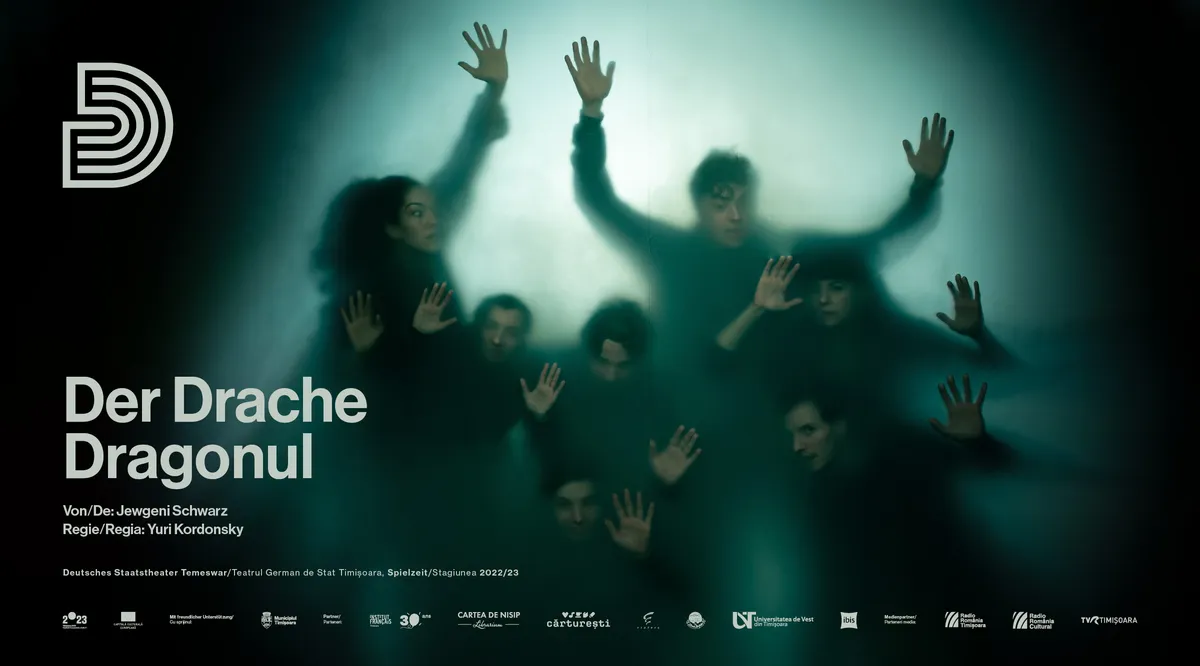
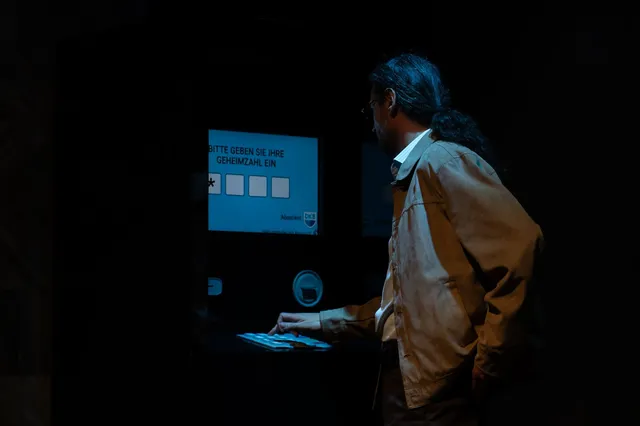
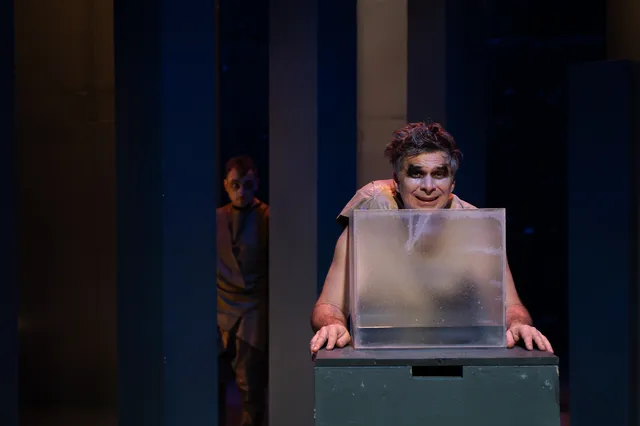
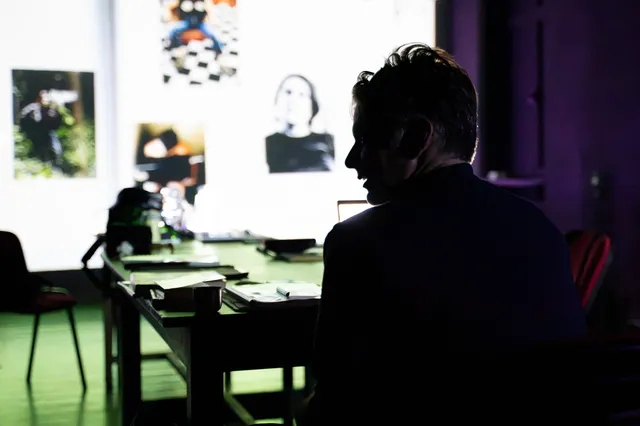
The German State Theatre Timisoara invites you to the last premiere of the 2022/2023 season - "The Dragon" by Yevgeny Schwarz, directed by Yuri Kordonsky. The event will take place on Friday, July 28, 2023, and there will be another performance the following day. Both performances are at 19.30. Tickets can be purchased at the German Theatre box office or here: https://www.entertix.ro/evenimente?s=teatrul+german
A dragon has enslaved a city for centuries. Residents must feed it thousands of cows, sheep and chickens and sacrifice a maiden to it every year. But the people have come to terms with this, no one rebels against it, on the contrary, they even find the dragon's rule safe. One day a young man, the knight Lancelot, appears and undermines this order. He falls in love with the beautiful Elsa, who is to be sacrificed that year, and wants to fight the dragon. But practically no one would be willing to support him in battle.
In 1943, Russian author Yevgeny Schwarz dressed his criticism of the German Nazi regime in the garb of a fairy tale. But the Communist leaders of the Soviet Union at the time also saw themselves reflected in the Dragon play. In Moscow in 1944, after two general rehearsals, the performance was banned. The parable remains frighteningly topical in view of Russia's war against Ukraine. For Schwarz not only satirizes dictatorships but also shows that arbitrariness and violence endure because people have internalized the mechanisms and values of such a system of government.
About this production, Yuri Kordonsky said: "Human history teaches us that a fascist dictator is not the only, and perhaps not even the biggest, problem. The fault lies in human nature. After the dragon dies, people choose a new one to rule them in the blink of an eye. This cycle is endless and unfortunately it is part of our nature to give up our freedom, conscience and honor for good food, a decent wage and the security of our home. That is where the real dragon lives."
Born in Odessa, Ukraine, Yuri Kordonsky studied acting and directing in Saint Petersburg. Before emigrating to the US, he worked at the famous Maly Theatre. Currently he teaches directing at the Yale School of Drama in New Haven, USA. As a director, Kordonsky works all over the world, and many of his productions have won major prizes. The Dragon is his third production at the GSTT. A. P. Chekhov's The Seagull was followed in 2017 by The Incredible and Sad Story of Innocent Eréndira and Her Heartless Grandmother, based on stories by G. Garcia Marquez. The production was awarded the prize of the Romanian Theatre Union, UNITER, for the Best Direction and the prize for the Best Scenography (Helmut Stürmer - sets; Ioana Popescu - costumes and live sand drawings).
Russian writer Yevgeny Schwarz was born in 1896 and grew up in the North Caucasus. He studied law in Moscow and Rostov until the October Revolution. After participating in World War I, he was a member of an amateur theater company and held occasional jobs. Later, he worked as a playwright and then as a freelance writer. Schwarz was inspired by authors such as Hans Christian Andersen, Nikolai Gogol and E.T.A. Hoffmann, and wrote about 30 plays, adaptations of fairy tales. However, he used symbols, motifs and themes to denounce the political conditions of his time. As early as the 1930s, his play Naked King, in which he created a portrait of an authoritarian ruler, was banned. During Stalin's dictatorship, Communist officials tightened censorship, particularly in the post-war years. Schwarz's plays were almost never performed. He died in 1958 near St Petersburg.
With: Isa Berger, Robert Bogdanov-Schein, Alma Diaconu, Ioana Iacob, Marc Illich, Alexandru Mihăescu, Harald Weisz.
Direction: Yuri Kordonsky (guest) • Scenography: Ioana Popescu • Dramaturgy: Rudolf Herbert • Video: Cristian Ienciu • Stage speech: Ulrike Schulze (guest) • Assistant Director: Isolde Cobeț • Make-up: Bojița Ilici • Light design: Cosmin Anania • Original live music: Sorina Savii (guest), Lucas Kohl (guest) • Technical Direction: Costinel Stănescu, Cătălin Tănase