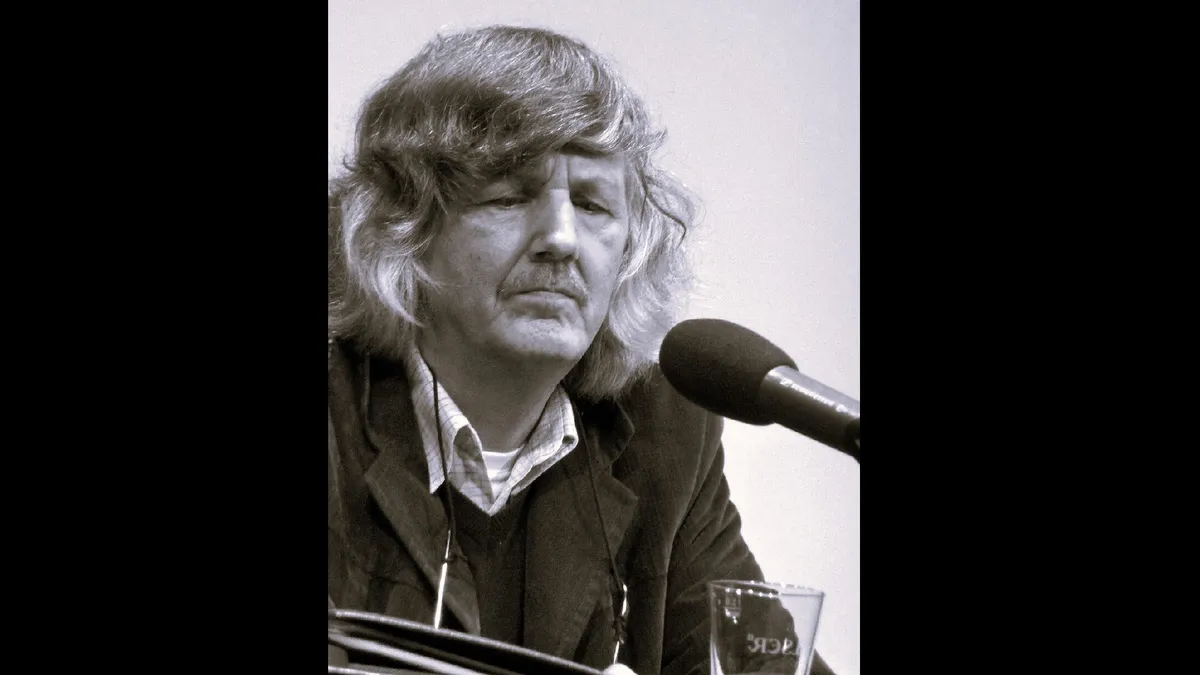
The German State Theatre Timișoara expresses its profound sadness at the passing of writer Johann Lippet, poet, prose writer, and one of the important voices of German-language literature in Romania. Johann Lippet passed away on the evening of 5 October 2026, following a long and incurable illness.
Born in 1951 in Wels, Austria, into a family of refugees from Banat, Johann Lippet returned to Romania with his family in 1956. The experience of this return and the turbulent history of his family would later become the subject of an extensive epic poem, biografie. ein modell, published in Bucharest in 1980 and subsequently translated into Romanian.
Lippet belonged to the generation of German writers from Banat who, in the 1970s, sought to find their own forms of expression and to question the realities of the society in which they lived. He was one of the founding members of the Aktionsgruppe Banat (Banat Action Group), a literary group which, between 1972 and 1975, brought together young German-language writers from Banat. The dissolution of the group, following pressure exerted by the Securitate, did not, however, mark the end of Johann Lippet’s literary activity.
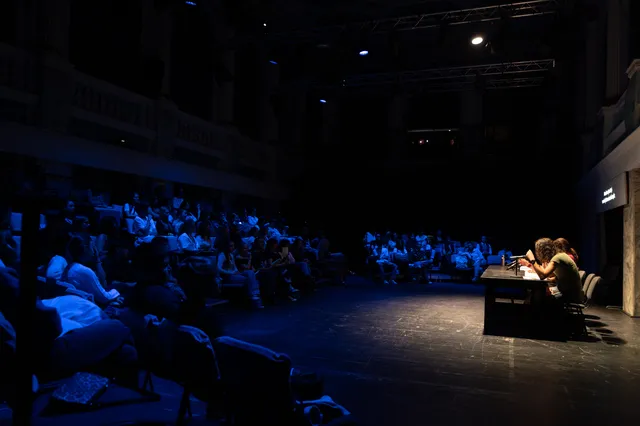
For the German State Theatre Timișoara, Johann Lippet remains directly connected to the institution’s history. Between 1978 and 1987, he served as the theatre’s literary secretary, contributing to its artistic and literary work during a period when the German cultural sphere in Romania was subjected to increasing pressure. At the same time, he continued his activities within the German-language literary circle of the Timișoara Writers’ Association.
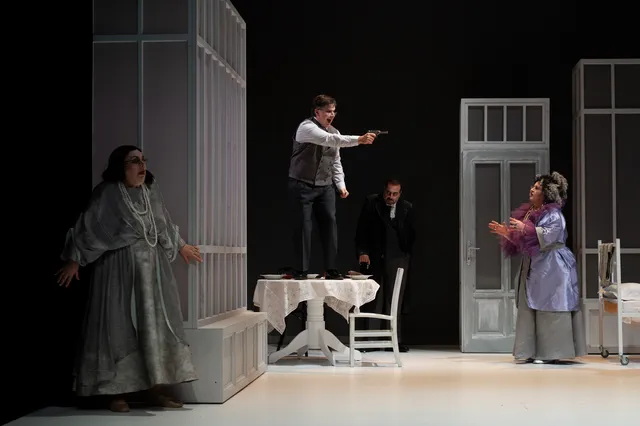
At the German State Theatre in Timișoara, Lippet was responsible for the dramaturgy of numerous popular plays and beloved comedies written in the Banat Swabian dialect, including Two Ties, Silvesterparty, Beautiful Yu, Two Sisters, The Housekeeper, Liederabend, Schwowestick mit… Blechmusik, and others. These productions played a decisive role in shaping the cultural identity of the German minority. He also collaborated on productions of works by German classics such as Goethe and Schiller, as well as on state-authorised translations of contemporary Romanian texts. Among his responsibilities were adapting texts for the stage and preparing programme booklets.
In 1987, like many other German writers from Romania, Johann Lippet emigrated to the Federal Republic of Germany. There, he continued his literary career, publishing numerous volumes of poetry, prose, and autobiographical works. The village of Vizejdia, where he spent his childhood, remained one of the central themes of his writing, becoming a space of memory, identity, and personal and collective history.
Through his work, Johann Lippet kept alive the memory of a vanished world and gave a voice to a generation of writers who played a decisive role in shaping German-language literature in Romania in the second half of the 20th century.
The German State Theatre Timișoara extends its sincere condolences to his family, friends, colleagues, and to all those who knew and cherished Johann Lippet.
We will keep his memory alive through his work and through the place he holds in the cultural history of Timișoara.
May he rest in peace.