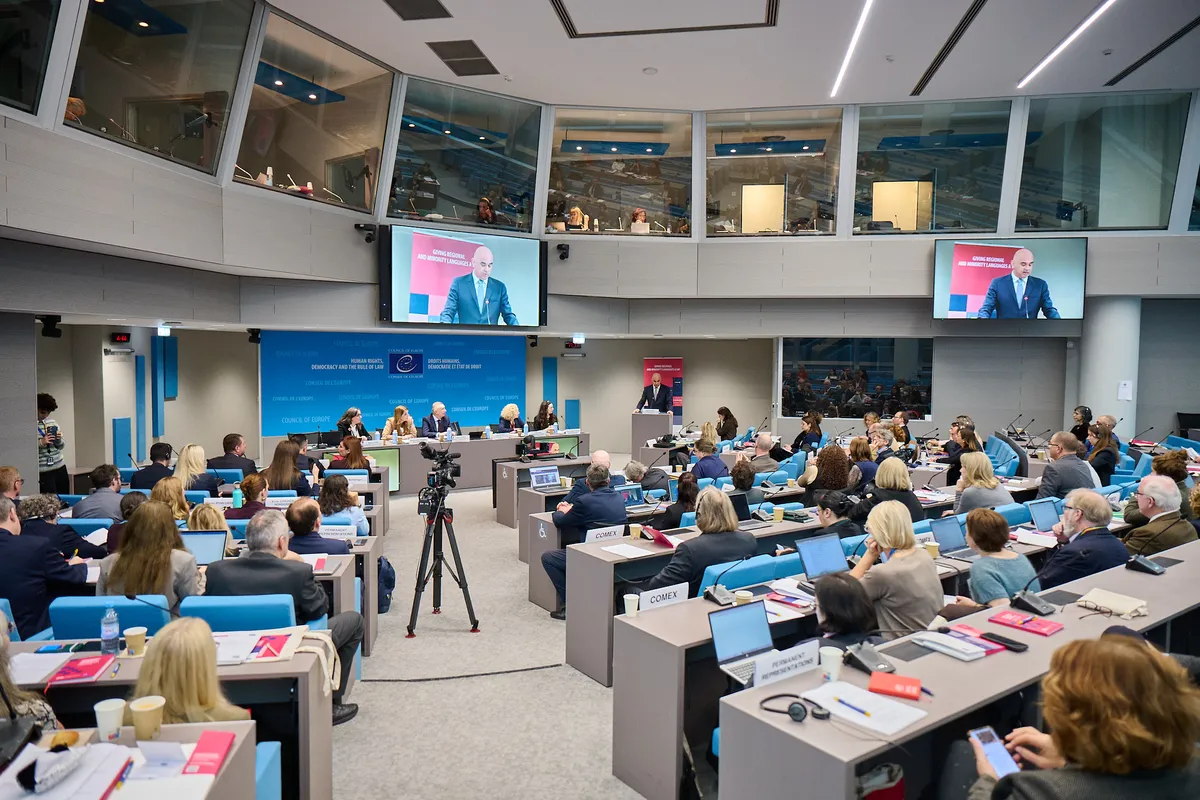
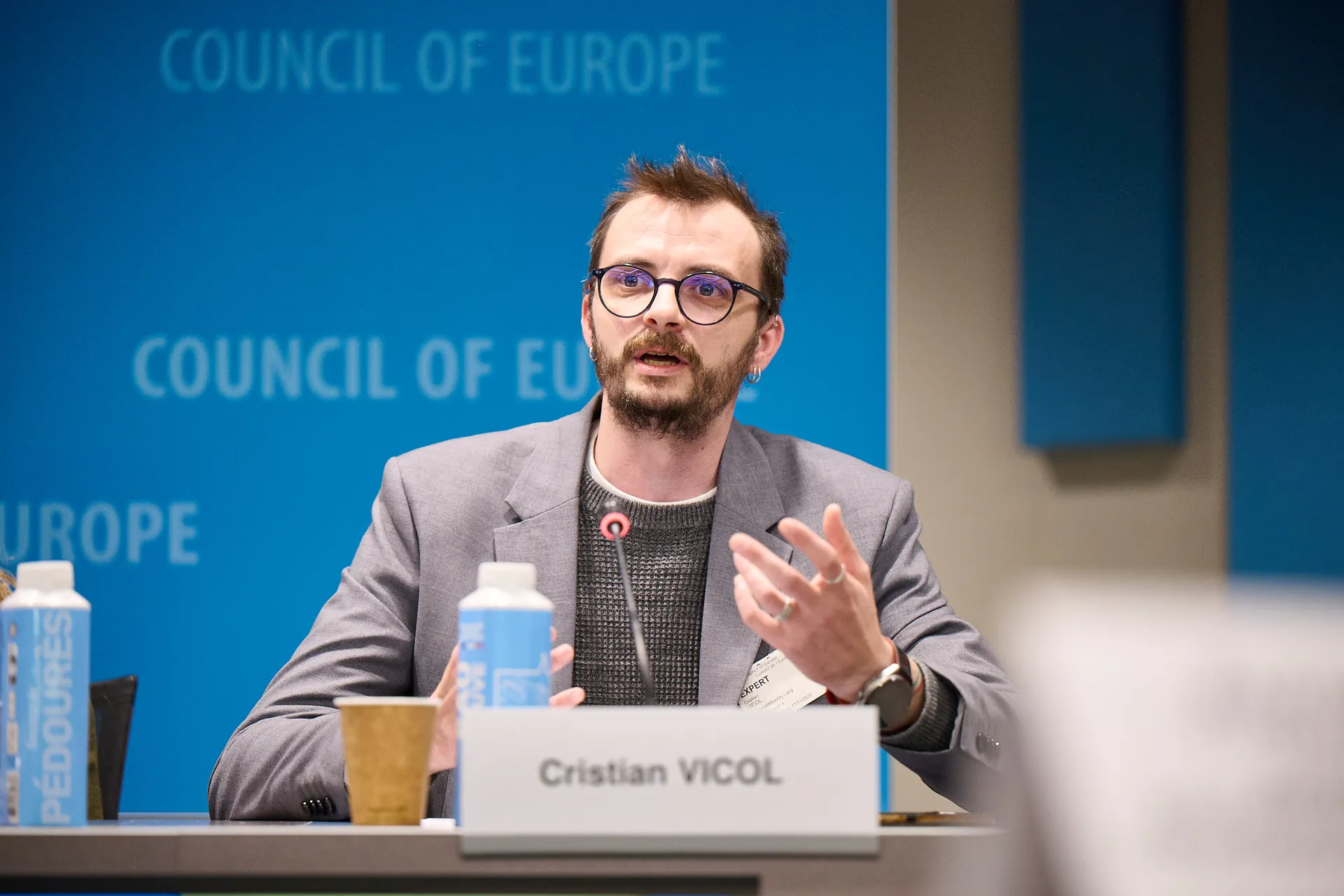
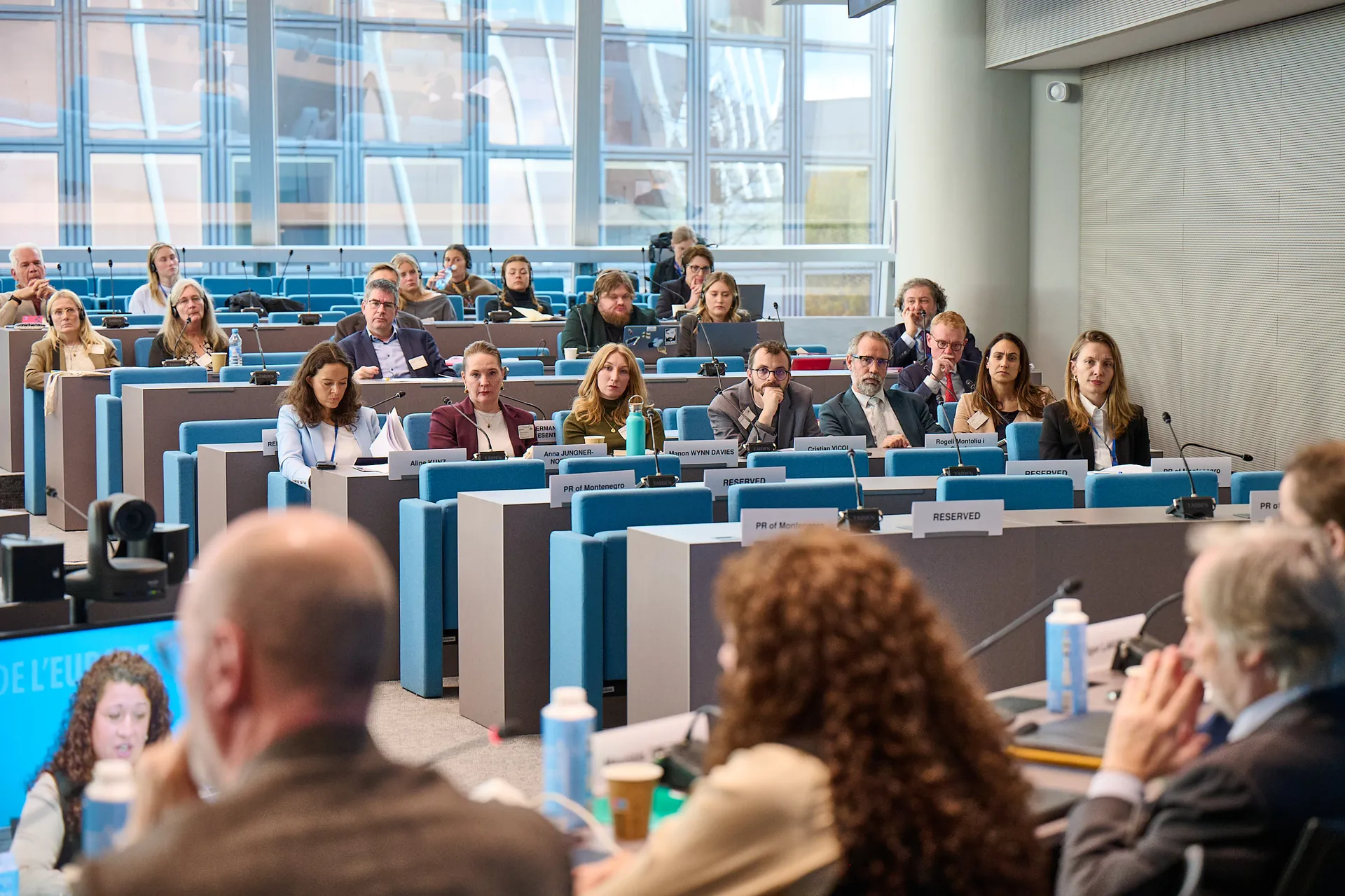
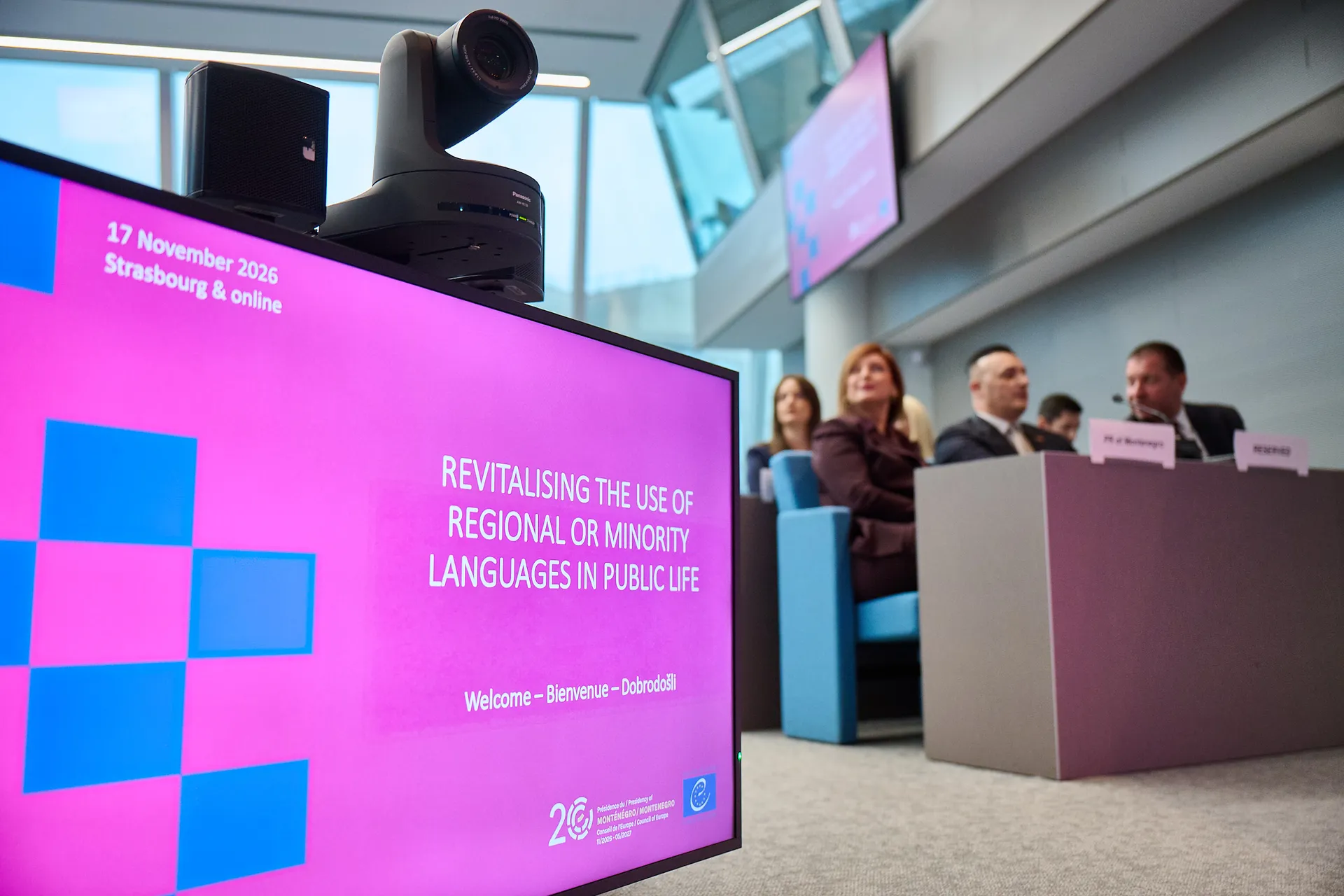
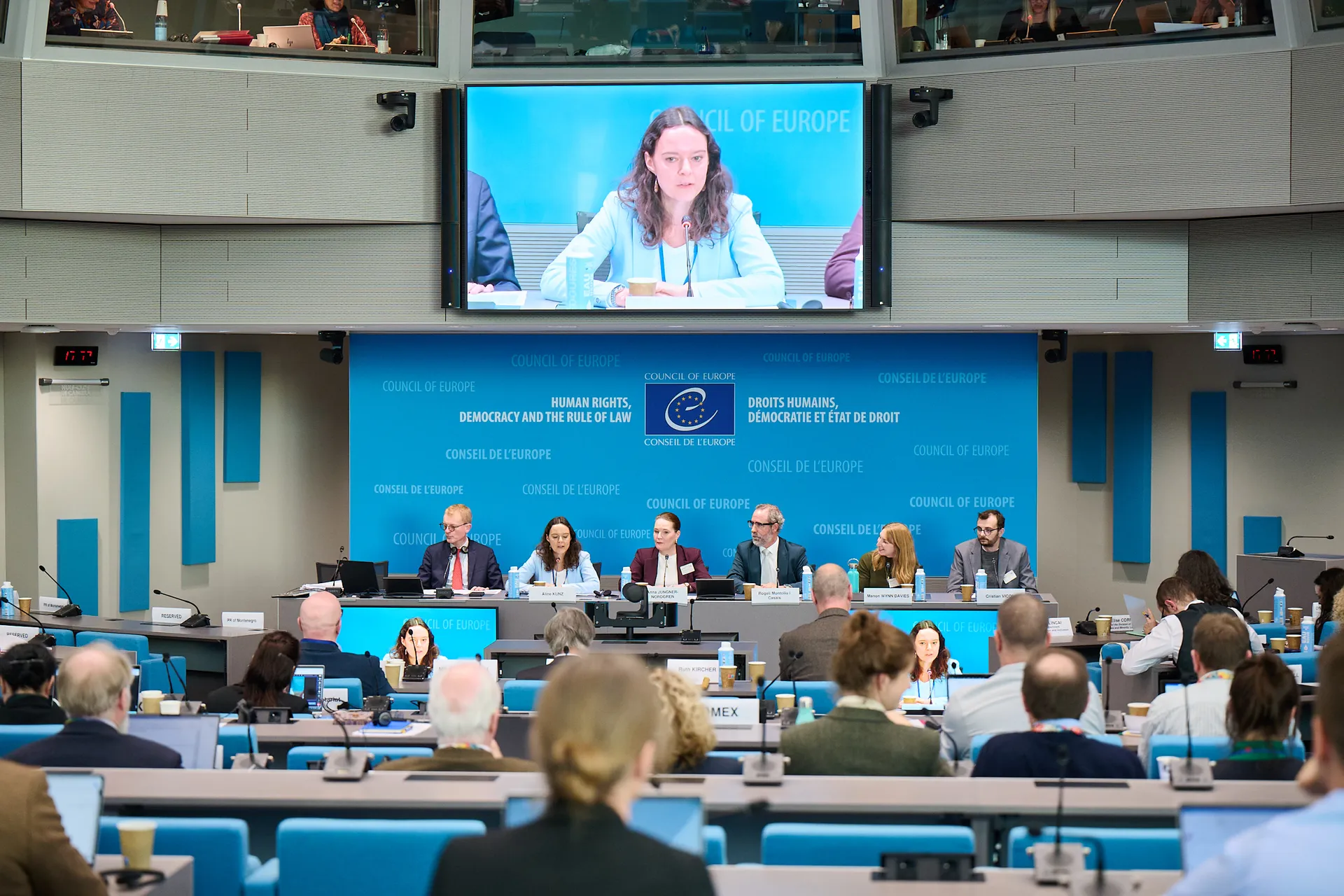
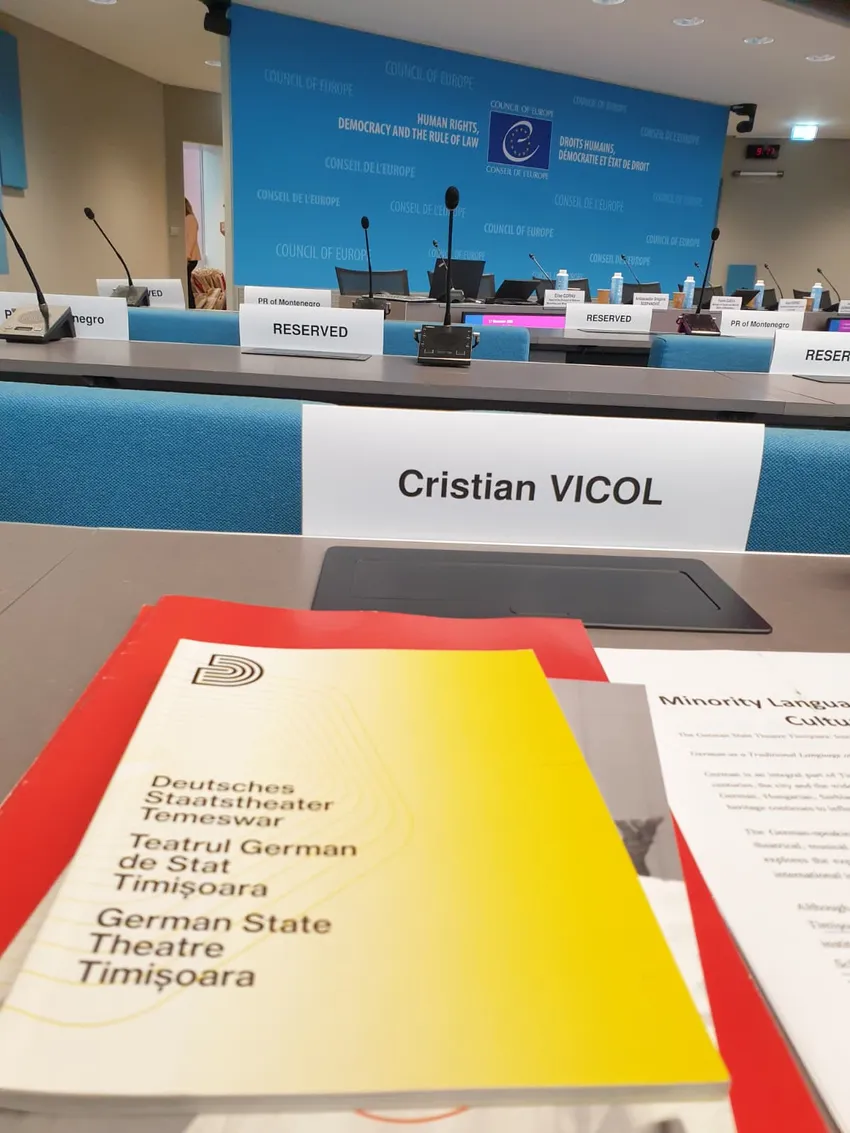
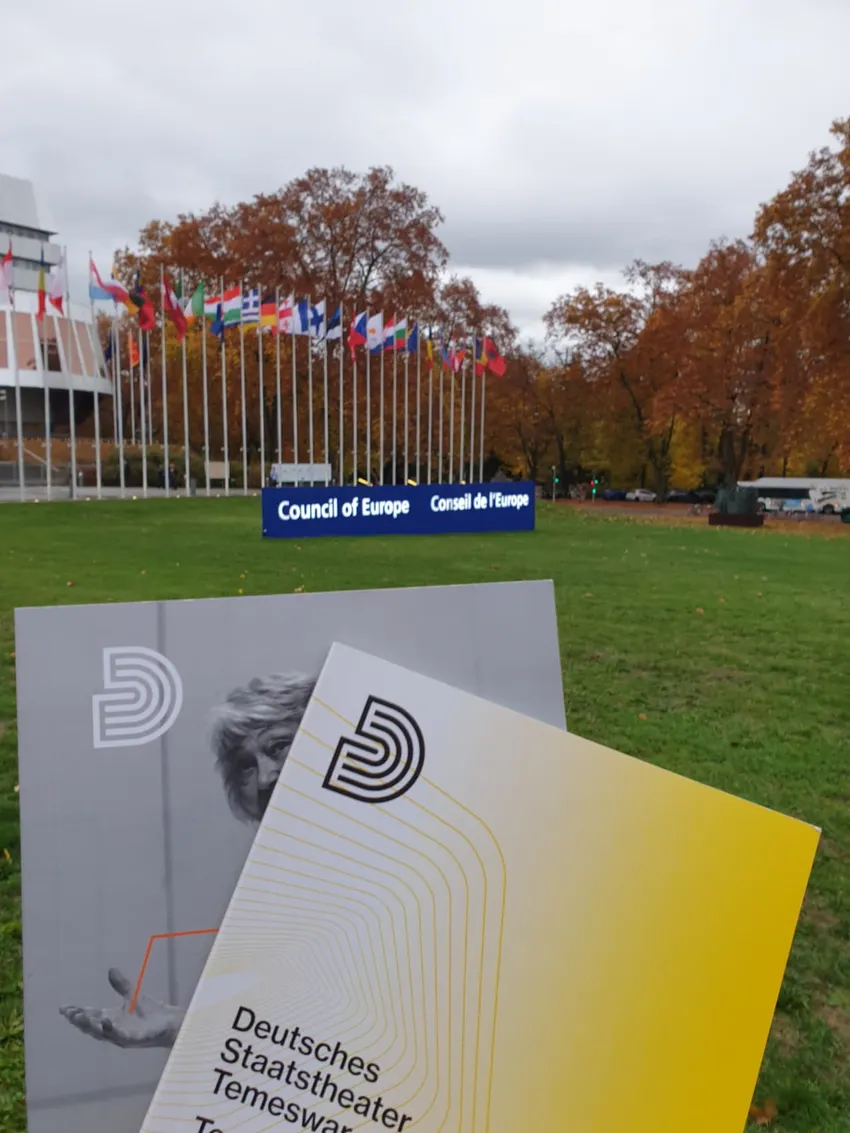
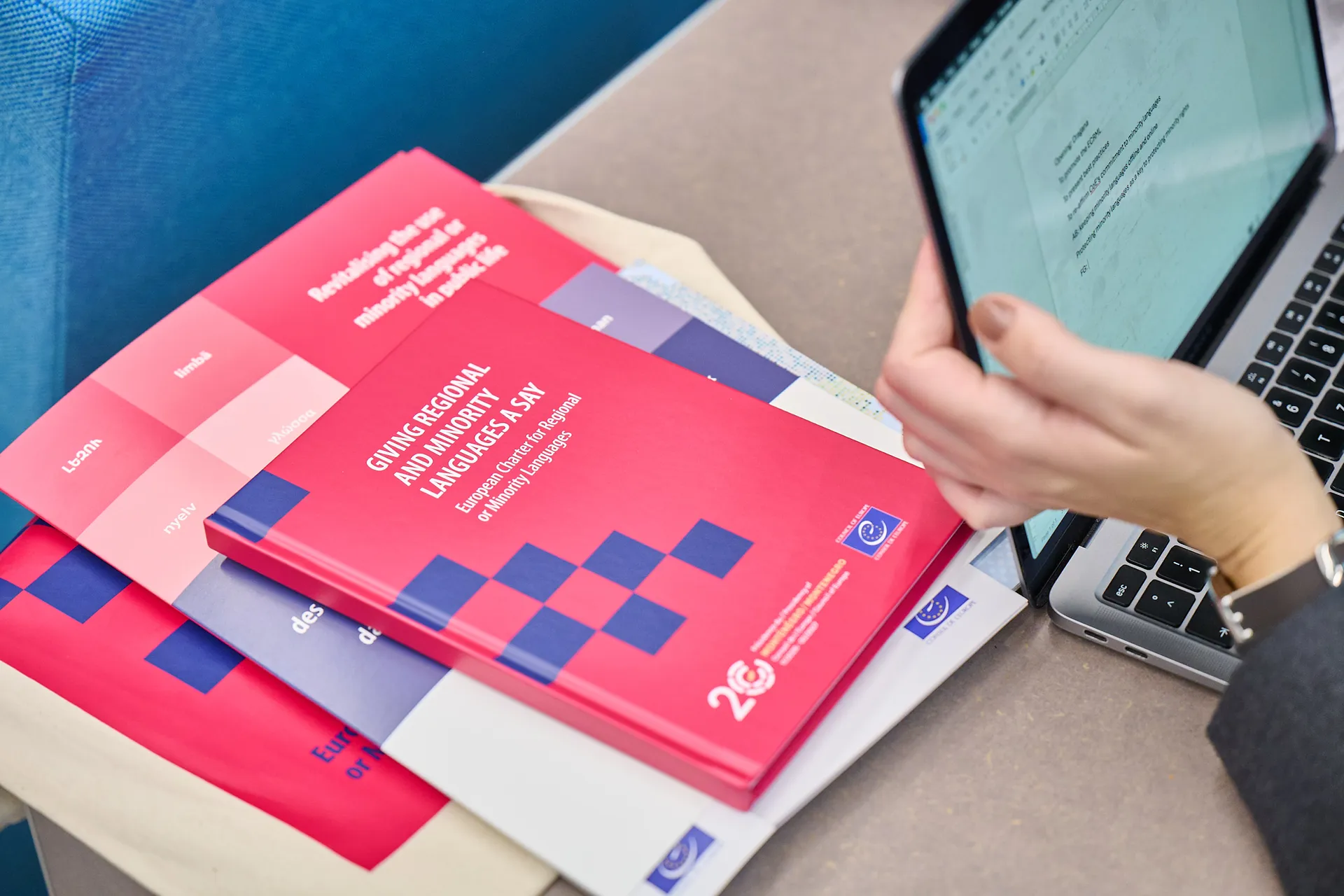
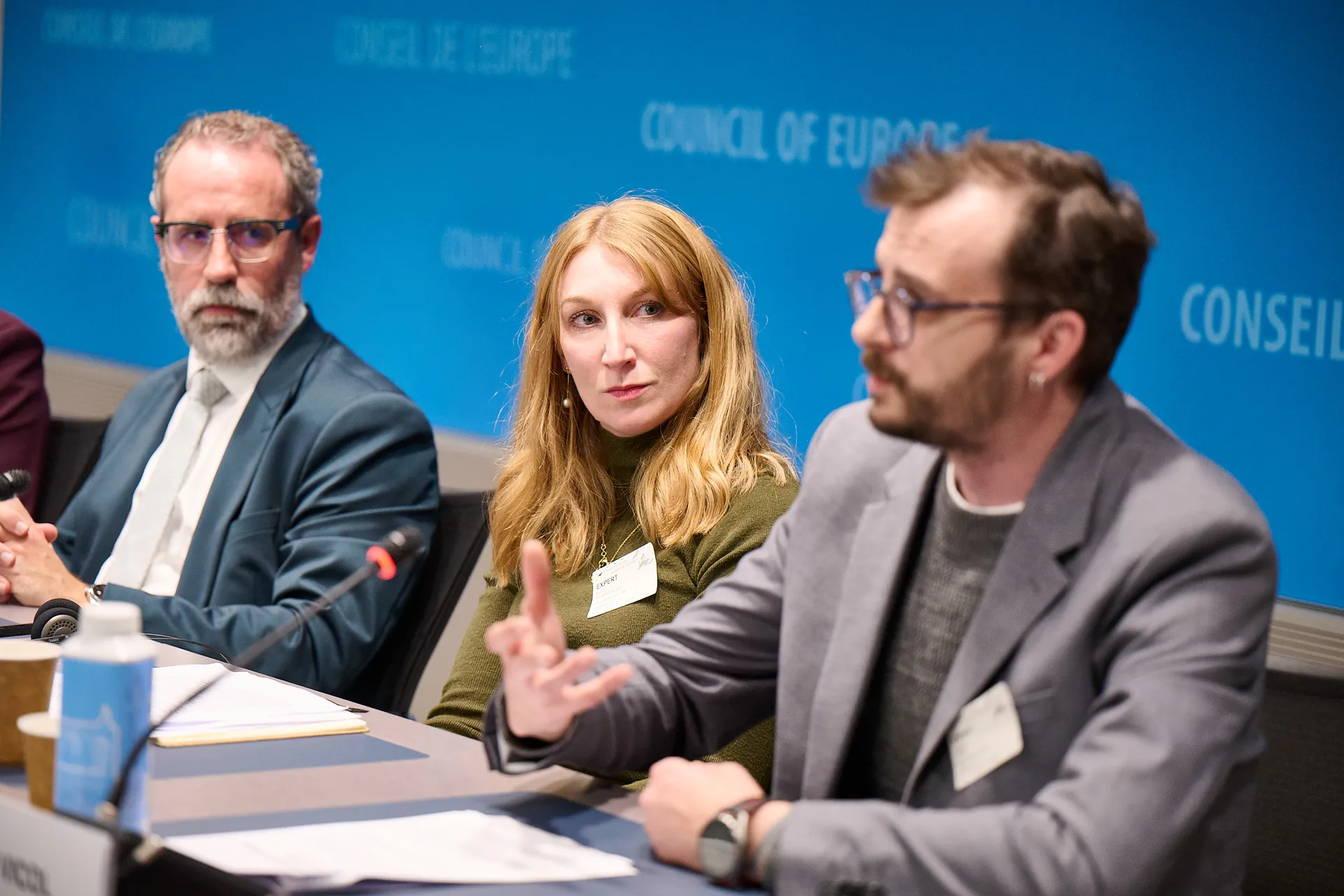
The German State Theatre Timișoara (GSTT) participated in the international conference “Revitalising the Use of Regional or Minority Languages in Public Life”, organised by the Council of Europe in Strasbourg on 17 November 2026. The institution was represented by Cristian Vicol, Public Relations Officer and Spokesperson. The event brought together representatives of European institutions, experts and professionals from the fields of culture and language policy to discuss the role of regional and minority languages in public life and the responsibility of institutions in ensuring their continued vitality.
The German State Theatre Timișoara took part in the session dedicated to “Minority Languages in General Cultural Life”, during which Cristian Vicol presented the experience of the Timișoara-based institution and the ways in which the theatre contributes, through its artistic and educational activities, to preserving and promoting the German language and culture in Romania.
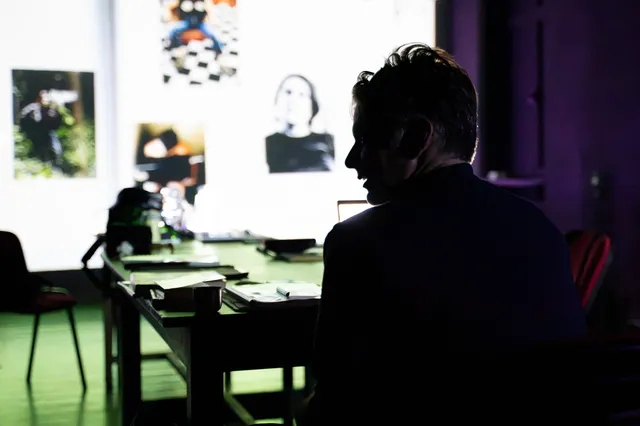
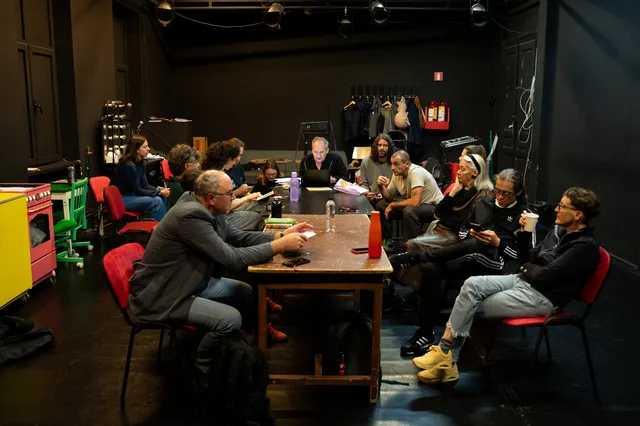
The presentation highlighted the role of the German State Theatre Timișoara as a public cultural institution that goes beyond preserving a linguistic tradition, actively contributing to maintaining German as a living language of artistic expression and intercultural dialogue. It showcased the diversity of the theatre's repertoire, which includes classical and contemporary drama, musical theatre, literary adaptations, and performances for children and young audiences, as well as the various ways in which the institution engages with its audiences: surtitles in Romanian and English, educational projects, workshops, audience discussions, and collaborations with schools and universities.
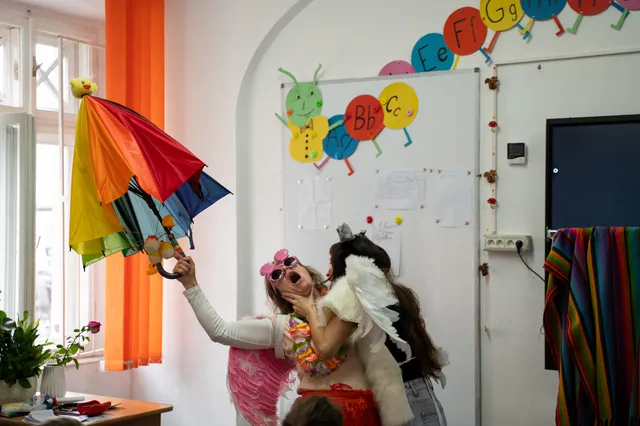
An important part of the presentation focused on the educational project “Theater in dialogue”, through which the theatre establishes direct connections between performing arts and the school environment, giving young people the opportunity to discover theatre, engage with the German language, and take part in artistic creative processes. In this context, the presentation highlighted the collaboration with the Nikolaus Lenau Theoretical High School in Timișoara, as well as the organisation of the International Festival of German-Language Theatre for Schools and Young Audiences, a long-standing event that encourages younger generations to discover and practise theatre in German.
The role of the NiL theatre group was also emphasised. Over the years, the group has helped bring young people closer to the performing arts and contributed to the development of a new generation of theatre audiences and artists. The presentation also addressed the collaboration with the Faculty of Music and Theatre at the West University of Timișoara, particularly its German-language acting programme, as well as partnerships with the German-language media, including the Allgemeine Deutsche Zeitung für Rumänien (ADZ) and the German-language editorial department of Radio Timișoara. These collaborations help maintain the presence of German in educational, artistic, and media environments while strengthening the theatre's ties with the German-speaking community and the wider public.
The conference also provided an opportunity to highlight Timișoara's multicultural character, as the city's identity has been shaped over centuries by the coexistence of Romanian, German, Hungarian, Serbian, and other ethnic and linguistic communities. In this context, German is not merely part of the region's historical heritage, but also an active component of contemporary cultural life. The German State Theatre plays an essential role in this landscape, contributing to the transmission of German cultural heritage to younger generations while enriching the cultural offering available to the entire community.
The central message of the presentation was that the survival and development of a minority language cannot depend exclusively on the efforts of the community that speaks it. Rather, they require a shared commitment on the part of public institutions, cultural organisations, schools, academia, and civil society. The experience of the German State Theatre Timișoara demonstrates that theatre can become a meeting place for languages and cultures, where linguistic diversity is not merely protected, but actively celebrated through artistic creation and dialogue.
Participation in the Strasbourg conference represented an important opportunity to promote the German State Theatre Timișoara internationally and to showcase the multicultural model that defines the city's cultural life. The institution's presence at this European-level event was positively received, contributing to strengthening its international visibility and recognising the role it plays in preserving and developing German culture in Romania.
Furthermore, the participation offered an opportunity to present Timișoara as an example of multicultural coexistence and cooperation between communities, where cultural institutions make a direct contribution to preserving diversity and strengthening the city's European identity.
Through its participation in this Council of Europe event, the German State Theatre Timișoara reaffirms its commitment to promoting the German language through theatre, keeping intercultural dialogue alive, and contributing to the recognition of linguistic diversity as a fundamental value of European society.