The German State Theatre Timișoara (GSTT) announces the launch of the cultural and educational project “Theatre in Dialogue,” a large-scale initiative running from April to November 2026, which aims to bring theatre closer to young people and transform it into an active tool for learning, reflection, and civic engagement.
Addressed to middle school and high school students, as well as teachers, the project promotes theatre as a space for intercultural dialogue and as a valuable pedagogical resource, capable of stimulating critical thinking, creativity, and empathy. The initiative continues the directions opened by the pilot program “ImpulsTeatru” and is co-financed by the National Cultural Fund Administration (AFCN).
Theatre – beyond performance, towards an educational experience
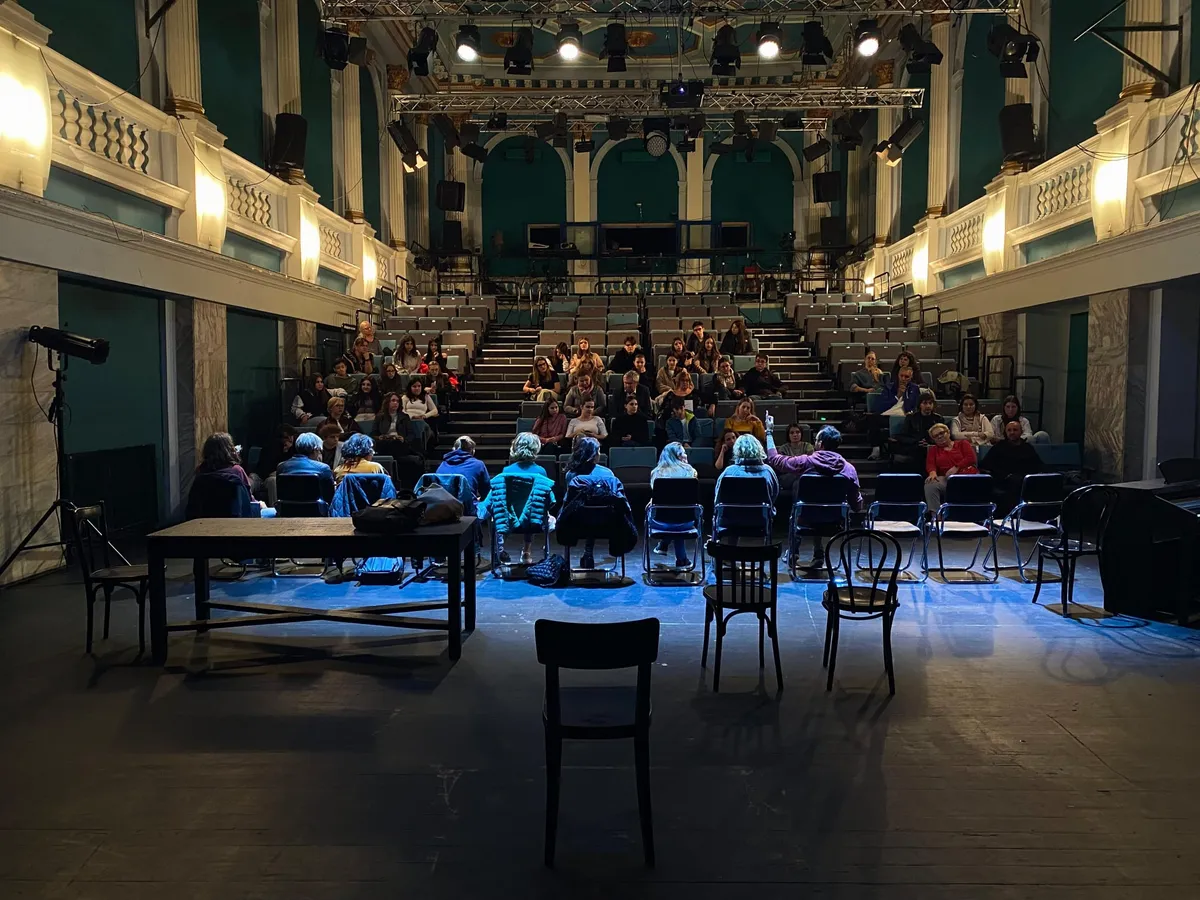
“Theatre in Dialogue” proposes an integrated approach in which watching a performance becomes the starting point for a complex educational process. Students are not just spectators, but active participants involved in workshops, debates, creative exercises, and interdisciplinary activities that connect theatre art with contemporary realities.
The project unfolds in several complementary stages. In the first phase, focus groups with teachers and students will be organized, leading to the development of trilingual pedagogical brochures (Romanian–German–English). These will include cultural and historical contexts, methodological teaching suggestions, exercises for students, and multimedia resources, offered free of charge in both physical and digital formats.
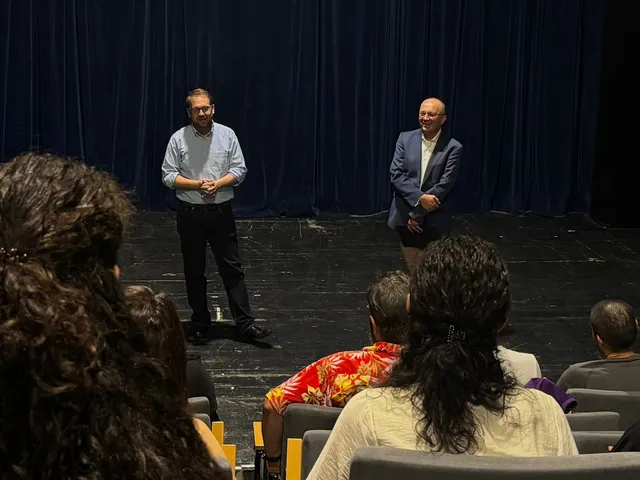
At the same time, the TGST team—composed of theatre educators and artists—will hold interactive seminars in schools, adapted to the students’ age and language of instruction. Students will learn how to analyze performances, understand stage language, and decode the role of artistic elements such as directing, scenography, and music.
Performances addressing current themes
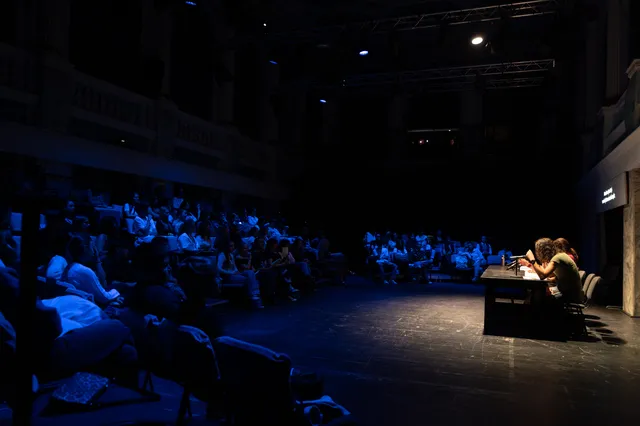
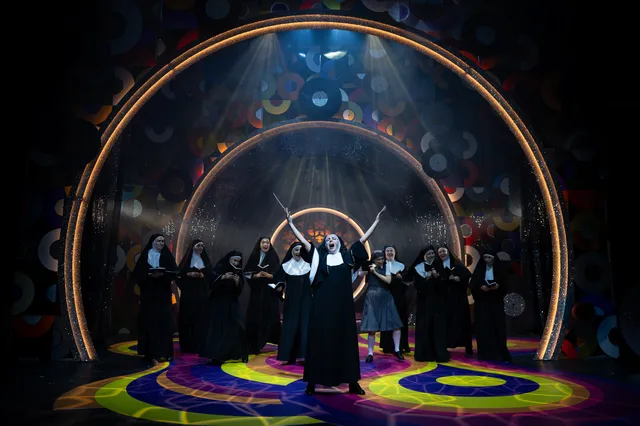
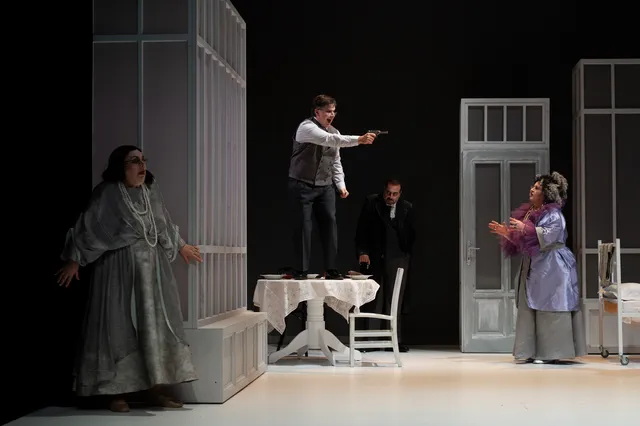
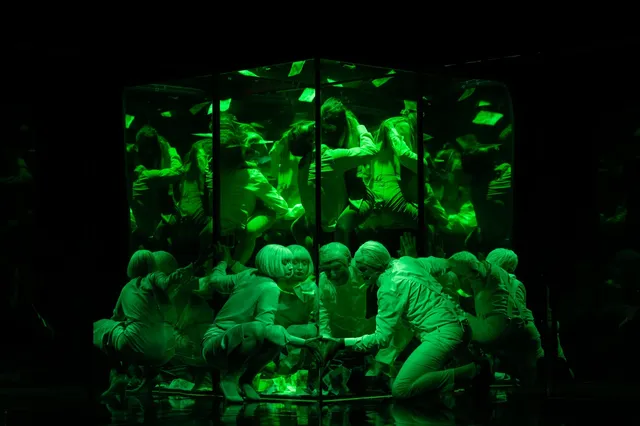
A central element of the project is students’ participation in performances from the TGST repertoire, followed by discussions with the artistic teams. The selection includes productions addressing contemporary themes such as migration (“Katzelmacher. If It Wouldn't Be about Love” by Rainer Werner Fassbinder, directed by Eugen Jebeleanu; “Europe” by David Greig, directed by Alexandru Mihăescu), the challenges of adolescence (“Tschick. Why We Took the Car” by Wolfgang Herrndorf, directed by Irisz Kovacs; “The Son” by Florian Zeller, directed by Mădălin Hîncu), as well as contemporary reinterpretations of classical texts (“The Cherry Orchard” by A.P. Chekhov, directed by Volker Schmidt; “A Midsummer Night’s Dream” by William Shakespeare, directed by Kristóf Szabó; “Lysistrata 3.0” after Aristophanes, directed by Niky Wolcz; and “Leonce and Lena” by Georg Büchner, directed by Niky Wolcz).
These experiences are complemented by follow-up activities, in which students take part in structured debates and participate in reflection and creative workshops, developing their ability to argue and express themselves.
From spectators to creators
An innovative component of the project is the playwriting lab for young people, where students will have the opportunity to create their own theatrical texts, guided by professional playwrights. The resulting texts will be included in a bilingual anthology, and two of them will be turned into performances staged directly in classrooms. In this way, theatre becomes a direct and personal experience, in which students are both authors and audience.
Interactive and innovative formats
The project also introduces unconventional formats, such as the escape room “Face the Dragon,” inspired by the performance “The Dragon” by Yevgeny Schwartz. This immersive experience transforms participants into protagonists of a story about courage, freedom, and responsibility, stimulating critical thinking and collaboration.
Students can also explore theatre from a critical perspective through theatre journalism workshops, where they will learn how to write reviews and articles about performances.
Finally, the project culminates in the “Theatre Quiz,” an inter-high school championship that combines theatre culture with creative challenges, encouraging team spirit and active involvement in cultural life.
A partnership for education through art
Through “Theatre in Dialogue,” the German State Theatre Timișoara reaffirms its role as an active cultural institution within the community, supporting education through art and collaboration with the school environment. The project aims to build lasting bridges between cultural and educational institutions and to contribute to shaping a generation of engaged, critical, and creative young people.
Educational institutions are invited to join this initiative by involving teachers and students in the proposed activities, thus contributing to the development of an open, interdisciplinary educational ecosystem connected to contemporary realities.
This project does not necessarily represent the position of the National Cultural Fund Administration. The AFCN is not responsible for the content of the project or for how the project results may be used. These are entirely the responsibility of the funding beneficiary.